I took this photo when I was on holiday in Tasmania about 8 years ago. It's taken from the boat cruise off of Bruny Island and I reckon it would have been a pretty good Led Zeppelin album cover, maybe between Houses of the Holy and Physical Graffiti.
Monday, May 19, 2025
Tasmania: Land of Led Zeppelin Album Covers
Sunday, May 4, 2025
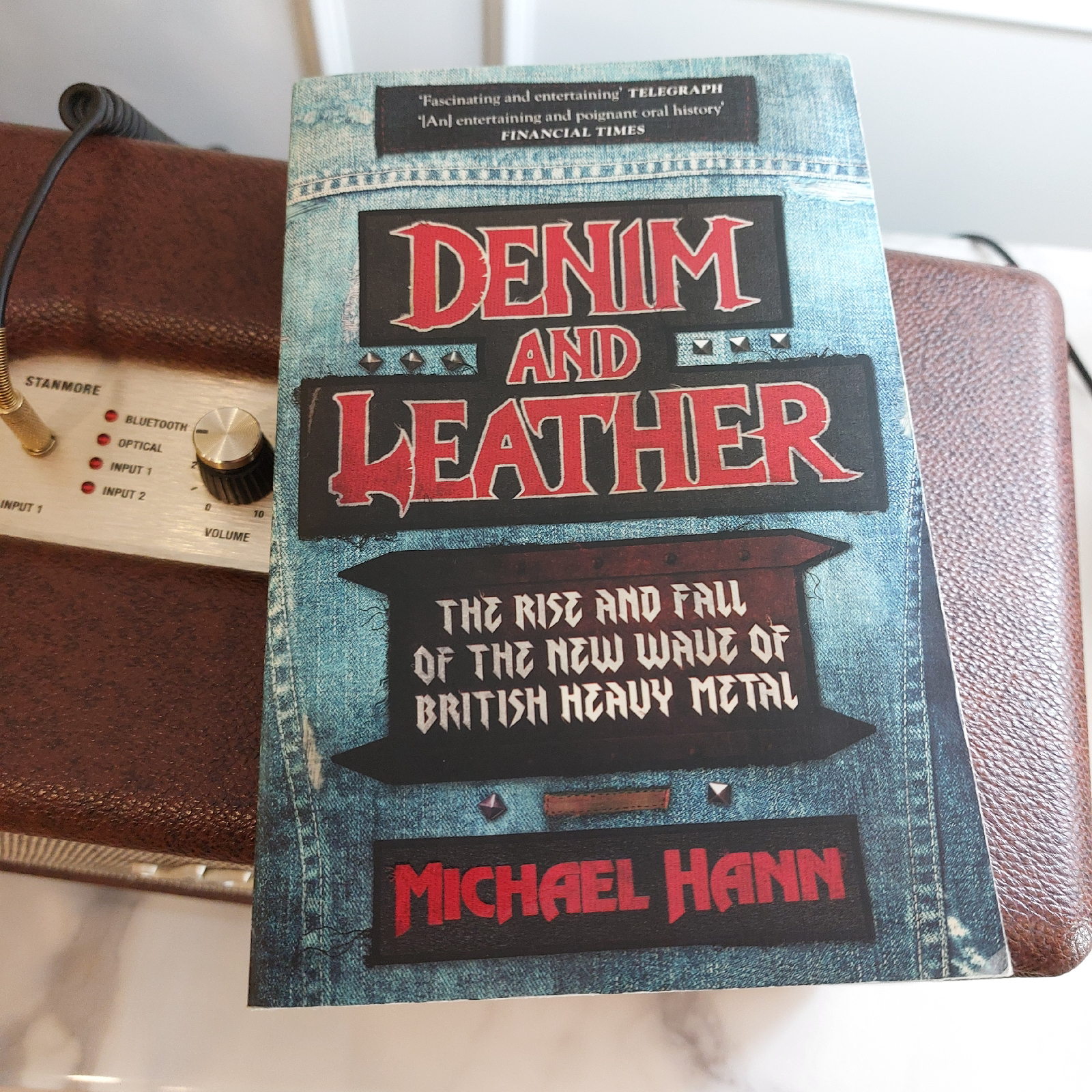
Denim & Leather by Michael Hann
In 1978, Heavy rock had a certain look and sound. Open chords rang out. Musicians might wear silk or Spandex. Kimonos were not unknown. But by 1983, things were different, and what we now call Heavy Metal was set. Denim or Biker jackets, leather trousers, studded wristbands, and palm-muted riffs. The music got faster and a group of fans dispersed in unfashionable towns had became a tribe. Michael Hann's Denim and Leather is a history of the years that codified Heavy Metal.
You don't actually need to like the NWOBHM to enjoy the book. Reading it feels like flipping through a photo album of a vanished Britain — not the royal weddings and Margaret Thatcher kind, but the one with prefab estates, burned-out Ford Cortinas, and hand-drawn band logos scratched into school desks. Hann takes us back to the early ’80s, to a world where in the North of England bands like the Tygers of Pan Tang played working men’s clubs with sticky carpets and bingo on Tuesdays. There's an especially evocative description of the Marquee Club, complete with Lemmy on the slot machines.
One of then things I enjoyed was its discussion of the importance of Glam on influencing the NWOBHM. Hann’s interviews reveal just how many musicians were turned on by T. Rex and Queen before they ever heard Sabbath or Priest (the number of future metalheads who cite one of their first singles being Queen’s Seven Seas of Rhye is notable). NWOBHM didn’t emerge out of nowhere — it evolved, often in secret, from teenage glam fans who found distortion.
That tribal identity was held together not just by the music, but by a scattered but passionate media ecosystem. Kerrang! wasn’t just a magazine; it was a lifeline. The Friday Rock Show on BBC Radio 1, hosted by Tommy Vance, was a weekly communion. And then there was the Monsters of Rock festival at Donington. The description of the first festival is one of the book's highlights, as fan after fan remembers their awe at the size of the crowd and realizing their were other people jut like them. These were the glue — the things that took a thousand small-town scenes and turned them into a national (and international) movement. And that international point is important, as by the mid 80s, the most important innovate bands were coming from the US and Europe. The New Wave of British Heavy Metal also became the Last Wave.
What Denim & Leather also captures — gently, without judgment — is the inevitable fade. By the mid-’80s, the moment had passed. The bands that didn’t break through disbanded. The music press moved on. Thrash arrived. Glam came back, only now it was American and glossy. The NWOBHM bands who didn’t adapt were relegated to footnotes and second-hand bins. But Hann treats them with respect — not just because they mattered, but because they still do to the people who were there. And to people who maybe missed it the first time but found it later — in old records, fanzines, or forums where people still debate the best Venom record ("In League with Satan").
Tuesday, March 26, 2019
To Disco With Love
But my recent phase has been influenced by David Hamsley's To Disco With Love, a book that collects together some of the Disco era's album artwork, grouped into different themes (with the mid 70s dominating, there's a lot of golds, browns and sunburnt finishes), The covers are often pretty much as bad as you would expect, but then again, so what? As a Black Sabbath fan, I'm perfectly comfortable with the idea of great music coming with dreadful covers.
And a lot of it was great. Chic and Giorgio Moroder get a lot of the attention these days, but at the moment I prefer the mid 70s period: less glitter more strings plus a sprinkle of high camp (which, let's face it, gave flavour to most of the great pop from the 70s). Disco's borders with Funk and soul were pretty porous, and the book finds space for Kool & the Gang, Philadelphia International and even Ramsey Lewis.
Friday, February 8, 2019
10 Random Thoughts About the Bohemian Rhapsody Film
Monday, May 22, 2017
Village People and Bjorn Again
When the web site stated something along the lines of “Bjorn Again will support Village People, but both acts will play for the same amount of time”, you suspected that either there had been some tense running order discussions or perhaps the promoters had realised that nobody with a credit card wanted to watch a full set of Village People, even on their 40th anniversary.
I’d seen Bjorn Again previously, so knew what to expect: kimonos, peroxide and a lot of cheese: cheesy Swedish accents, cheesy dance moves and cheesy “this half of the hall sing with me” type banter. Ah, who cares, what you also get are tour-perfected selections from one of pop’s best greatest hits catalogues. The Aussies have been doing this for a while now and obviously know at 8pm on a Friday night their audience is going to consist of people who have put their work week beyond them and have already had a couple of Tiger beers. So their slightly truncated set list found room for stompers such as Ring Ring and Honey Honey, but not the reflective Winner Takes it All. During the set it struck me that there a few better catalogues than Abba’s at removing arses from seats. They went down a storm.
Village People never had a chance. But they could have at least tried. In case you’re wondering, three of them were the original line-up (the Native American, the Soldier, and the Cop – and judging by the shape of the last, the San Francisco Police Department needs to revise it’s annual medical screening). During the second song I found myself saying to Mrs Hawkfall “They’re miming. Only the lead singer has his microphone turned on”. These sentiments were also expressed more loudly to the band by a couple of members of the audience a few songs later. This soured things a little bit, though towards the end of the set they managed to get some of the goodwill back (it was noticeable that the younger, non-original members were able to charm the crowd much more effectively than their elders).